The best AI tools for students in 2026 combine real-time academic search, interactive tutoring, and personalized workflow automation to cut study time in half while improving comprehension. Platforms like Perplexity AI, Claude, Notion AI, and Julius AI lead the pack by delivering verifiable citations, advanced STEM problem-solving, and seamless project management tailored to high school and college coursework.
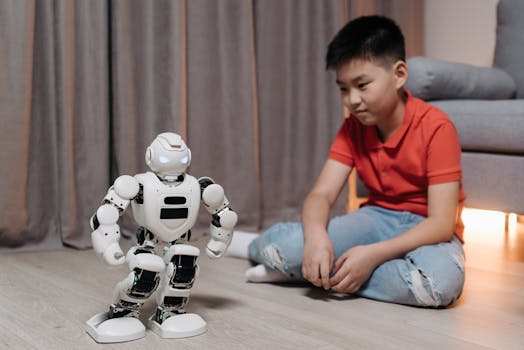
Modern academic environments in the United States have moved far past simple copy-and-paste text generators. Today’s classrooms and lecture halls demand sophisticated analytical partners that enhance critical thinking rather than replace it.
1. How AI Tools Are Reshaping Education in 2026
From Generative Chat to Context-Aware Tutors
In 2026, artificial intelligence functions as a persistent academic co-pilot. Instead of generic answers, modern educational software incorporates your specific course syllabi, past lecture notes, and textbook PDFs to act as a 24/7 personal tutor. These systems adapt their explanations to your individual learning pace, diagnosing knowledge gaps in real time.
Multimodal Learning Capabilities
Students no longer rely solely on text prompts. Current platforms accept hand-drawn calculus formulas, audio recordings of three-hour seminars, and scanned laboratory printouts, parsing all of them instantly. This multimodal approach allows visual, auditory, and kinesthetic learners to interact with complex material in the formats that suit them best.
2. Top AI Writing and Research Assistants
Academic integrity standards in American universities have reached record stringency. The writing tools that succeed in 2026 are those that emphasize verifiable sources, thesis development, and logical structure over automated essay generation.
Perplexity AI
Perplexity has established itself as an indispensable research search engine. By querying academic databases, peer-reviewed journals, and reputable web publications simultaneously, it provides direct, sourced answers with inline citations. Students can use Perplexity to construct literature reviews, verify obscure statistics, and explore nuanced counterarguments without sifting through pages of sponsored search engine results.
Claude 3.7
Developed by Anthropic, Claude is celebrated for its natural writing tone and massive context window. It excels at parsing expansive reading lists, comparing historical viewpoints across primary source documents, and helping students brainstorm structural outlines for senior capstones or term papers. Its output reads with academic rigor, avoiding the repetitive cadence common in earlier language models.
GrammarlyGO
GrammarlyGO has evolved from a basic spellchecker into a full-scale stylistic editor. It monitors tone, structural flow, and argument clarity, ensuring your papers meet standard American academic conventions. It also flags accidental plagiarism and improperly formatted citations in APA, MLA, and Chicago styles before you hit submit.
3. Leading AI Tools for STEM and Problem Solving
STEM majors face unique analytical hurdles that general text models often struggle to resolve. Dedicated technical engines provide step-by-step logic, data visualization, and code generation.
Julius AI
Julius AI is the premier tool for statistics, data science, and economics students. By uploading CSV files, Excel spreadsheets, or research datasets, students can prompt Julius to run complex regressions, produce clean charts, and interpret statistical significance. It explains the mathematical theory behind every result, making it a powerful companion for quantitative assignments.
Wolfram Alpha with Generative AI
The computational brilliance of Wolfram Alpha has merged with natural language processing to create a flawless problem-solving environment. Engineering and mathematics students rely on it to break down differential equations, multivariable calculus, and physics vectors with precise, step-by-step explanations that teach methodology rather than simply supplying the final answer.
GitHub Copilot
For computer science majors, GitHub Copilot remains the gold standard in paired programming. It autocompletes functions, debugs syntax errors in languages ranging from Python to C++, and explains complex algorithms line by line. Copilot accelerates practical coding assignments while reinforcing clean software engineering principles.
4. Best AI Study Planners, Note-Takers, and Flashcard Creators
Organizing study schedules, extracurricular commitments, and exam prep requires robust productivity software. AI integration has turned traditional planners into proactive academic assistants.
Notion AI
Notion AI serves as an all-in-one digital binder. It can summarize raw lecture notes into bulleted study guides, create prioritized daily study schedules, and extract action items from group project briefs. Its relational database capabilities let you track course credits, assignment deadlines, and reading lists inside a unified workspace.
Otter.ai
Capturing fast-paced lectures is effortless with Otter.ai. The platform records speech, transcribes it with speaker identification, and automatically generates concise summaries highlighted with key takeaways. For students balancing back-to-back classes, Otter ensures essential test material is never missed.
Quizlet Q-Chat
Quizlet’s conversational AI tutor, Q-Chat, applies the principle of active recall through adaptive questioning. Instead of passively flipping flashcards, students converse with the AI, which tests their recall, presents hypothetical scenarios, and identifies which concepts require further review before exam day.
5. Feature Comparison of Leading AI Tools for Students
Choosing the right platform depends on your major, budget, and specific academic requirements. The table below outlines how the leading tools stack up in 2026.
| Tool Name | Primary Category | Standout Feature | Free Tier Available? | Typical Student Price |
|---|---|---|---|---|
| Perplexity AI | Academic Research | Real-time citations & academic journal filters | Yes | Free / $20/mo Pro |
| Claude | Writing & Analysis | Large context window for long texts | Yes | Free / $20/mo Pro |
| Julius AI | STEM & Data Science | Graph generation & statistical analysis | Yes (Limited) | $20/mo |
| Wolfram Alpha | Mathematics/Physics | Deterministic step-by-step calculations | Yes (Basic) | $5/mo Student Pro |
| Notion AI | Workspace & Notes | Syllabi parsing and dynamic study schedules | Yes (Freemium) | $8-$10/mo add-on |
| Otter.ai | Audio Transcription | Automated lecture summaries and slide capture | Yes | Free / $8.33/mo Student |
| Quizlet Q-Chat | Active Recall Study | Conversational Socratic flashcard quizzing | Yes (Basic) | $35.99/year Plus |
6. Best Practices for Ethical AI Use in American Classrooms
Using AI software effectively requires balancing efficiency with honesty. American academic institutions have instituted strict parameters regarding unauthorized assistance.
Verify Campus AI Policies
Every university, high school district, and individual professor maintains distinct rules regarding generative AI. Review each course syllabus to verify whether software can be used for ideation, editing, or not at all. When in doubt, request written clarification from your instructor before completing major assignments.
Use AI as a Scaffold, Not a Ghostwriter
The most beneficial educational strategy treats AI as a personal tutor that probes your thinking. Ask models to quiz you on course concepts, critique your written arguments, or explain difficult textbook excerpts in plain terms. Never submit direct AI output as your original work; doing so constitutes academic dishonesty and risks disciplinary action.
Fact-Check Every Claim
Language models can still output subtle inaccuracies, known as hallucinations. Always verify mathematical calculations, historical dates, and scientific assertions using trusted textbooks or peer-reviewed library databases. The student remains solely responsible for the factual accuracy of any submitted work.
Our Top Pick
The single best resource across all categories is Perplexity AI.
While competitors like Claude excel at creative text generation and Wolfram Alpha dominates pure math, Perplexity AI bridges the gap between deep academic research and everyday homework productivity. Its primary advantage is transparency: every assertion comes backed by clickable, reputable footnotes.
For students tasked with writing evidence-based research papers, annotating bibliographies, or understanding complex scientific concepts, Perplexity eliminates search engine noise and cuts research time by hours. Its ability to restrict searches strictly to academic databases makes it the most reliable, hallucination-resistant platform available for students in 2026.
Frequently Asked Questions
What is the single best free AI tool for students in 2026?
Perplexity AI offers the strongest free tier for general student use. It provides fast, accurate research answers paired with live web and academic citations, making it invaluable for homework, essay planning, and quick fact verification without requiring a paid subscription.
Can professors detect AI-written papers in 2026?
Yes. Modern university detection tools analyze writing style, vocabulary consistency, and linguistic patterns across a student’s prior submissions. More importantly, professors detect AI by testing students on the underlying logic and source material of their papers during oral evaluations and in-class discussions.
Is using AI considered academic dishonesty in US schools?
It depends entirely on your school’s code of conduct and the specific instructor’s syllabus. Using AI to tutor you through difficult concepts or check grammar is widely accepted, but presenting AI-generated text, code, or solutions as your own independent work is considered plagiarism.
How should students cite AI tools in APA or MLA format?
Both APA and MLA have established citation guidelines for AI. In MLA, cite the AI tool as the author, name the specific model, list the company that created it (e.g., OpenAI, Anthropic), the date the prompt was run, and the URL. In APA, cite the software creator as the author and include the specific prompt in your text or appendix.
Which AI tool is best for engineering and math majors?
Wolfram Alpha paired with Julius AI is the most effective combination for STEM fields. Wolfram Alpha delivers rigorous step-by-step solutions for calculus and differential equations, while Julius AI excels at cleaning experimental datasets, generating statistical plots, and analyzing lab data.
Do student discounts exist for premium AI platforms?
Yes, many major platforms offer discounted student tiers or free educational access. Services such as GitHub Copilot provide free access to verified students via the GitHub Student Developer Pack, while Notion and Wolfram Alpha offer heavily discounted annual memberships with a valid .edu email address.
Conclusion
Navigating the academic landscape requires adopting the best ai tools for students in 2026 to manage heavy course loads, conduct rigorous research, and grasp technical concepts faster. By integrating specialized platforms like Perplexity for literature reviews, Julius for complex datasets, and Notion for schedule organization, you can elevate your academic output while maintaining absolute integrity. Embrace these software options as personal mentors rather than shortcuts, and you will build the critical analytical skills essential for both college success and your future career.